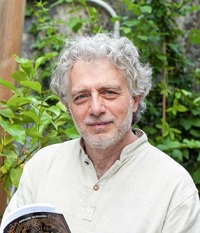
- Speaker
- Prof. Dimitri Batani
- University of Bordeaux (France)
- Abstract
The investigation of the generation of very strong shocks (initial pressures larger than 100 Mbar) in solid density matter is important for the study of matter in extreme pressure conditions as well as for laboratory astrophysics.
Here we report the results of an experimental campaign performed at CLPU using the VEGA–II laser facility. We focused on studying the dynamics of shocks produced by using fs-laser irradiation. We show that in this case the mechanism of shock generation relies on the energy deposition inside the target from hot electrons produced in laser-matter interactions. Due to the short laser pulse duration, pressure is not maintained in time and the shock takes the form of a blast wave.
In the experiment, we irradiated solid-density targets of aluminum or plastics of various thicknesses were irradiated by the fs-laser. A full characterization of the blast wave formation and propagation was performed using several diagnostics. X-ray emission was detected by using a bremsstrahlung cannon and a Kirkpatrick-Baez microscope. Together with electron spectrometers, they provided information about hot electron temperature. Optical diagnostics (shock chronometry) provided information on the propagation of the blast wave in solids. Doppler reflectometry provided information on the motion of the target rear surface.
- About the Speaker
Dimitri Batani is Full Professor of Exceptional Class at the University of Bordeaux, France, and conducts his research at CELIA (Centre Lasers Intenses et Applications). He is a member of the European Academy of Sciences (EURASC), a Fellow of the European Physical Society (EPS), and a senior member of the Institut Universitaire de France (IUF); he received the Friedel–Volterra Prize from the Italian and French Physical Societies. His research spans laser-produced plasmas, high energy density physics, plasma diagnostics, and inertial confinement fusion (ICF), with emphasis on shock ignition and on diagnostics and experiments related to the LMJ and PETAL high-power laser systems. He has coordinated major European initiatives, including EUROFUSION enabling research projects and the EquipEx PETAL+ program for advanced plasma diagnostics, and he chaired COST Action MP1208. He has published more than 700 articles in leading journals, including Physical Review Letters, Nuclear Fusion, and Nature Communications. According to Google Scholar, his h-index is 48 and his publications have received more than 8,400 citations.
- Date&Time
- 2026-04-15 2:30 PM
- Location
- Room: Conference Room I